

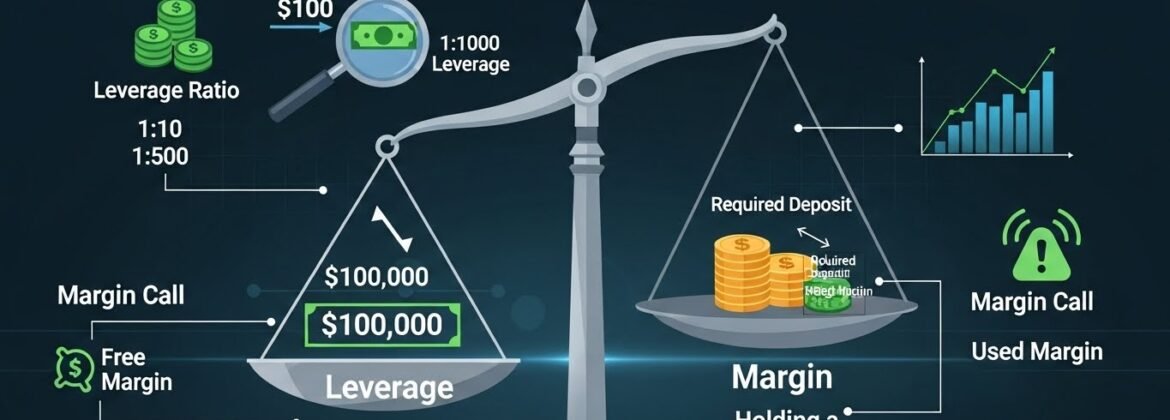
In Forex trading, leverage and margin are tools that allow traders to control larger positions with a relatively small amount of capital. While these tools can increase potential profits, they also significantly increased risk. Understanding how leverage and margin work is essential for managing trades responsibly and protecting your account.
What Is Leverage in Forex?
Leverage allows a trader to open positions that are larger than their actual account balance by borrowing funds from the broker.
Example:
With 1:100 leverage, a trader can control a $10,000 position with only $100 in capital.
Leverage is usually expressed as a ratio, such as 1:10, 1:50, 1:100, or 1:500. The higher the leverage, the greater the market exposure and potential impact on profits and losses.
What Is Margin?
Margin is the amount of money required in your trading account to open and maintain a leveraged position. It is a security deposit held by the broker, not a trading cost.
Margin formula:
Margin = Trade size ÷ Leverage
Example:
To open a $10,000 trade with 1:100 leverage, the required margin is $100.
How Leverage and Margin Work Together

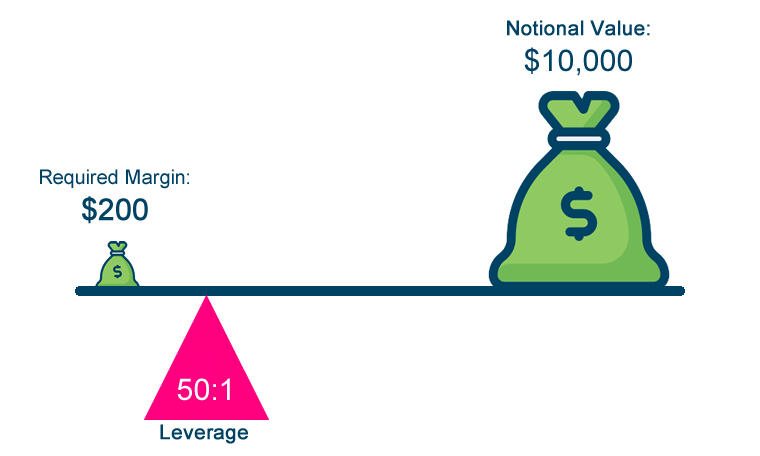
Leverage defines the size of the position you can control, while margin determines how much capital is set aside to keep the trade open. Profits and losses are calculated on the full position size, not on the margin amount.
Rewards of Using Leverage
Leverage allows traders to participate in larger market movements with limited capital. It can improve capital efficiency and create opportunities to benefit from small price changes when used with discipline and proper planning.
Risks of Using Leverage
High leverage increases the speed and size of losses as well as profits. A small unfavorable price movement can quickly reduce account equity, leading to margin calls or automatic position closures. Poor risk management combined with high leverage is one of the most common reasons traders lose money.
What Is a Margin Call?
A margin call occurs when account equity falls below the broker’s required margin level. The trader may need to add funds or close positions. If no action is taken, the broker may close trades automatically to prevent further losses.
Low vs High Leverage Comparison
| Aspect | Low Leverage | High Leverage |
|---|---|---|
| Risk Level | Lower | Higher |
| Margin Requirement | Higher | Lower |
| Profit Potential | Moderate | High |
| Loss Potential | Moderate | High |
| Suitable for Beginners | Yes | No |
Practical Tips for Using Leverage Safely
Start with low leverage until you gain experience. Use stop-loss orders on every trade. Risk only a small percentage of your account per trade. Avoid overexposure during high-impact news events. Focus on consistency rather than aggressive growth.