

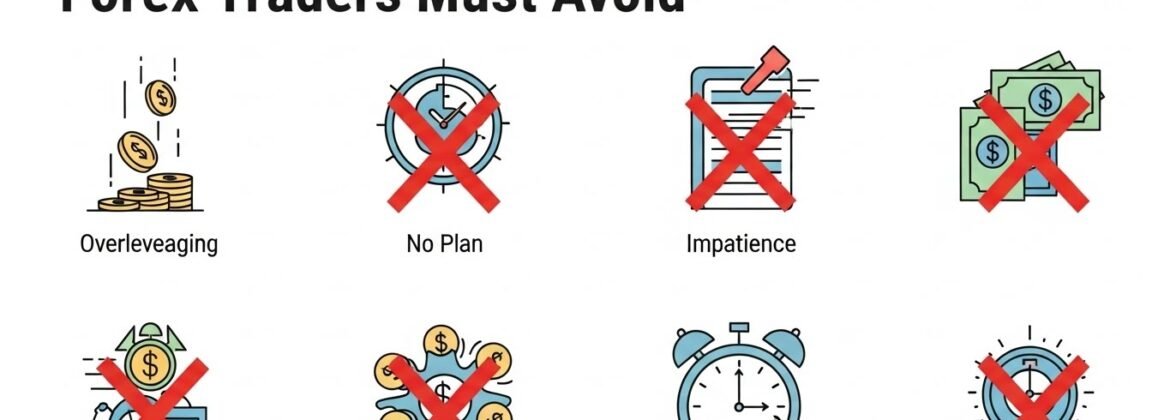
Forex trading offers many opportunities, but most beginners lose money due to avoidable mistakes rather than lack of market movement. Understanding these common errors can help new traders protect their capital, improve consistency, and build a strong foundation for long-term success.
Trading Without Proper Education
Many beginners start trading without fully understanding how the Forex market works. Trading without learning about market structure, currency pairs, leverage, and risk management often leads to poor decisions and unnecessary losses. Education should always come before live trading.
Overusing Leverage
High leverage can magnify profits, but it also magnifies losses. New traders often use maximum leverage to chase quick gains, which can quickly wipe out an account. Using lower leverage helps control risk and survive market volatility.
Lack of Risk Management
One of the most serious mistakes is risking too much on a single trade. Failing to set stop-loss levels or risking a large portion of the account can lead to rapid drawdowns. Professional traders focus on protecting capital by risking only a small percentage per trade.
Emotional Trading
Fear, greed, and impatience are common emotions that influence poor trading decisions. Traders often enter trades out of excitement or exit early out of fear. Emotional trading usually leads to inconsistent results and broken strategies.
Trading Without a Plan
Entering the market without a clear trading plan is like trading blindly. A proper trading plan defines entry rules, exit rules, risk limits, and trading goals. Without a plan, traders tend to make random and impulsive decisions.
Overtrading
New traders often believe that more trades mean more profit. In reality, overtrading increases transaction costs and emotional stress. Quality trades based on strong setups are far more effective than frequent, random trades.
Ignoring Market News
Major economic news and central bank announcements can cause sudden price movements. Beginners who ignore the economic calendar may get caught in unexpected volatility that disrupts technical setups and increases losses.
Chasing Losses
After a losing trade, some traders try to recover quickly by increasing position size or entering impulsive trades. This behavior often leads to even larger losses. Accepting losses as part of trading is essential for long-term success.
Not Practicing on a Demo Account
Skipping demo trading is another common mistake. Demo accounts allow traders to practice strategies, understand platform tools, and gain confidence without risking real money. Trading live without practice increases the likelihood of costly errors.
Unrealistic Expectations
Many beginners expect fast profits and guaranteed success. Forex trading is not a get-rich-quick scheme. Consistent profitability requires time, discipline, and patience.