
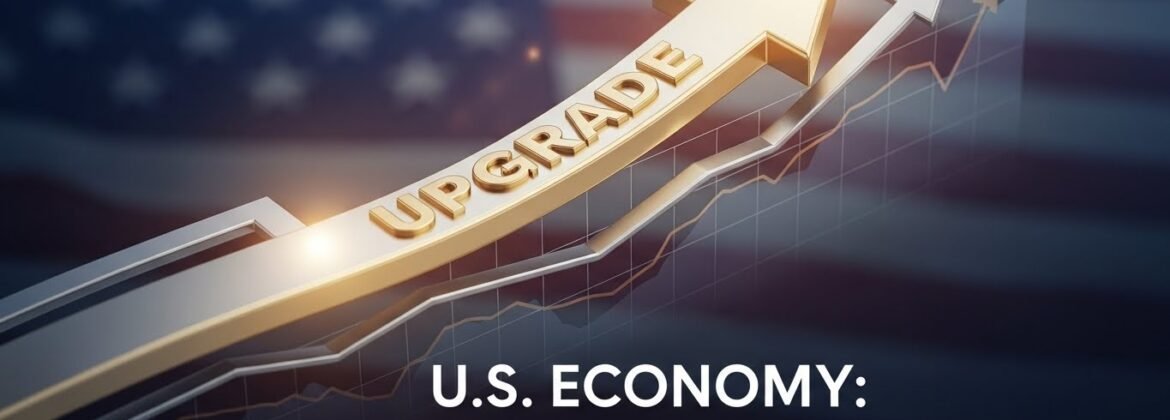
As the new year begins, the U.S. economy is entering 2026 with renewed momentum. Recent data revisions, improving productivity, and stabilizing inflation dynamics have prompted many analysts to upgrade growth expectations. While risks remain, the macro backdrop looks stronger and more balanced than it did a year ago.
What’s Driving the Upgrade
Several factors are contributing to a more constructive outlook.


First, growth resilience has exceeded expectations. Consumer spending has remained steady, supported by real income growth and healthier household balance sheets. Business investment has shown signs of recovery, particularly in technology and infrastructure-related sectors.
Second, inflation has cooled without collapsing demand. Disinflation across goods and a gradual easing in services inflation have reduced pressure on purchasing power while avoiding a sharp slowdown. This “soft-landing” dynamic has encouraged optimism.
Third, productivity gains are improving the supply side. Investment in automation, AI adoption, and supply-chain normalization has helped firms produce more without reigniting inflation—supporting higher potential growth.
Labor Market: Cooling, Not Cracking
The labor market is no longer overheated, but it remains fundamentally solid. Hiring has moderated, wage growth has normalized, and participation has improved. This balance reduces inflation risk while maintaining consumption.

A gradual cooling is precisely what policymakers have aimed for—slower momentum without a spike in unemployment.
Policy Implications
With growth holding up and inflation easing, the policy stance of the Federal Reserve is under closer scrutiny. If real rates rise as inflation falls, financial conditions can tighten automatically. That increases the likelihood of measured rate cuts later in the cycle to keep policy aligned with economic realities.
Markets are therefore sensitive to incoming data that confirm or challenge this upgraded outlook, particularly inflation prints, labor indicators, and credit conditions.
Market Impact and FX Takeaways
An upgraded growth outlook typically:
- Supports risk sentiment and equity markets
- Keeps yield volatility elevated as policy expectations adjust
- Creates two-way risk for the US Dollar, depending on relative growth and rate differentials

For Forex traders, the focus should be on how U.S. data compares with other major economies. Relative performance—rather than absolute strength—will drive currency trends.
What to Watch Next
Key signals to monitor include:
- Inflation progress toward target
- Labor market rebalancing
- Credit conditions and lending standards
- Forward guidance from policymakers
Sustained improvement across these areas would validate the upgrade and extend the cycle. Deterioration would quickly revive downside risks.
Bottom Line
The U.S. economy starts the new year with a credible upgrade—not because growth is accelerating sharply, but because it is proving durable and better balanced. If inflation continues to ease and productivity holds up, 2026 could mark a transition toward steadier growth with more flexible policy options.